ServicesRoof Inspections
Roof Inspections in Cumberland, IN
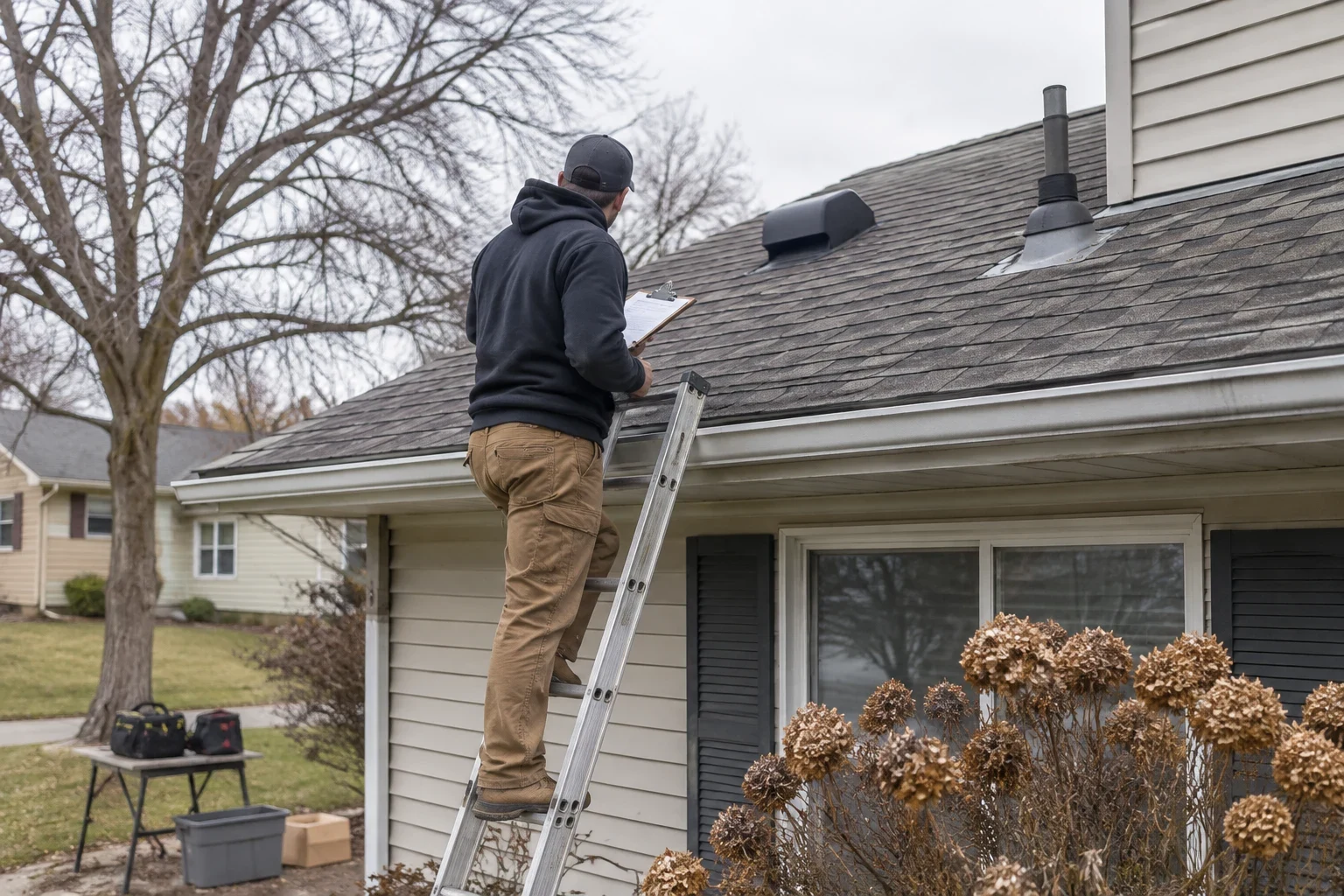
We get up on your roof and look at it up close: the shingles, the flashing, the pipe boots, the nails holding it all down. You get photos of what we found and a plain answer on what needs work, what can wait and what is fine as it is.
What a good inspection actually looks at
Most roof problems start small. A shingle tab that came unstuck. A split rubber collar around a vent pipe. A nail that backed out and is lifting the shingle above it. None of that shows from the driveway. Up on the roof, it does.
Those small details decide how long a roof lasts, so that is where we spend our time. We look at how the roof was put together, not just how old it seems. A roof with tight flashing and good airflow can outlast a newer one with a sloppy valley.
Roofing Cumberland is licensed, bonded and insured, and we are an Owens Corning Preferred Contractor. The inspection costs you nothing. There's no sales pitch afterward, and some days the honest answer is that your roof is doing fine.
The parts of your roof we go over
Shingle condition
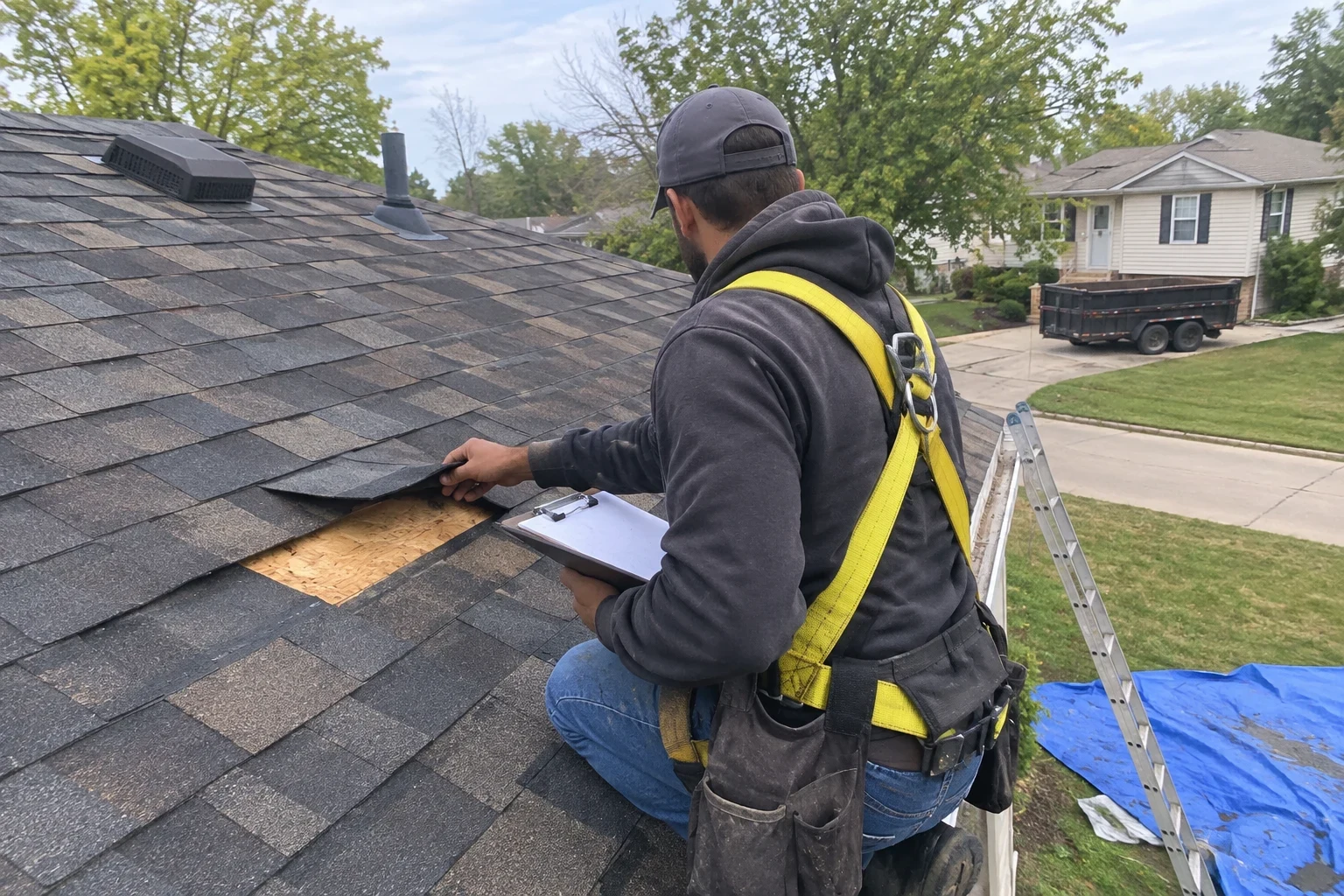
We check each slope for shingles that are gone, split, curling at the corners or blistered. Bare dark patches and sand-like grit in the gutters mean the granules are wearing off. A spongy feel underfoot tells us the wood below may have taken on water.
Flashing and valleys
Most leaks begin where the roof meets a chimney, wall or skylight, or where two slopes come together. We make sure the metal is lapped in the right order and sealed properly, not resting on a strip of caulk that will crack in a few seasons.
Pipe boots, vents and ridge
The rubber collars around plumbing pipes split after years of sun and cold. We look at every one, plus exhaust vents and the ridge vent. Bare nail heads get noted too, since they rust and open a path for water.
Drip edge and gutters
We confirm there is drip edge at the eaves and rakes, and that the gutters slope toward the downspouts and drain. Standing water at the edge rots fascia and decking. When gutters are the root of it, we tell you, and our Gutters page covers that work.
Attic and airflow
With your permission, we look inside the attic for stained wood, damp insulation, light showing around pipes and, in cold months, frost on the nail tips. Trapped heat bakes shingles from underneath and wears them out early.
Photos and a written summary
Every problem we flag gets a photo. You also get a short write-up that lists each item, why it matters and whether it should be handled now or can wait.
Signs your home is due for a roof inspection
- Water marks inside
- A yellow or brown blotch on a ceiling or wall means water found a way in. The actual leak is often several feet uphill from the mark, so finding it takes a careful look.
- A hail or wind storm came through
- Hail can bruise shingles in ways nobody sees from the yard, and strong wind can lift tabs and break their seal. Checking soon after the storm gets the damage photographed while it is fresh.
- Granules in the downspouts
- Sandy grit washing out at the bottom of the downspouts means shingles are losing their coating. Sometimes that is plain age, sometimes it is hail.
- Heavy ice at the eaves
- Indiana winters freeze and thaw again and again. Thick ice along the edge usually means heat is leaking into the attic, and the meltwater can push back under the shingles.
- Buying, selling or not sure
- If nobody can remember the last time the roof was checked, or a house sale is coming up, an inspection shows you where things stand before you plan anything.
How the inspection goes
- 1
You call, we set a time
We ask about the roof, how old it is if you know, and any leaks or stains you have spotted. Then we pick a time that fits your week.
- 2
Start at ground level
Before the ladder goes up, we walk around your home. We check roof lines, gutters, downspouts and fascia and note any sags, stains or loose pieces.
- 3
Up top, one slope at a time
If the roof is dry and firm underfoot, we go up and cover each face of it in turn, snapping photos as we go. A roof that is wet, icy or fragile we don't walk on. We check it from a ladder at the eaves.
- 4
Attic check
If you say yes, we head into the attic with a light. That is often where the real cause of a leak or a roof that wore out early turns up.
- 5
Go over what we found
We sit down with you and walk through the photos. You hear plainly whether to repair it, replace it or leave it be. Any needed work goes on a written line-item estimate, and financing is available.
What the inspection costs and what moves the next step
The inspection is free. What it turns up decides what any follow-up work costs. These are the things that move that number most.
- What is under the shingles
- Surface damage is one thing. Rotted decking or wet insulation found during the inspection adds material and labor to any repair.
- Roof size and pitch
- A bigger roof takes more material. A steep roof takes more time and more safety gear to work on.
- Roofing material
- Shingle, metal and flat TPO roofs are repaired differently, with different parts. Our Shingle Roofing, Metal Roofing and TPO Roofing pages explain each one.
- Repair or replace
- A few bad boots or a loose flashing piece is a small Roof Repair job. Widespread wear can make Roof Replacement the better value, and we will show you why with photos.
- Storm damage and insurance
- If the damage is from a storm, your policy may cover part of the work. We work with homeowners and insurance companies on storm damage claims.
Roof inspection questions
- Is the inspection really free?
- It is. We don't charge for coming out, taking the photos or going over the results with you. Saying yes to an inspection doesn't tie you to any work afterward.
- How long does it take?
- That depends on the roof's size and pitch, and on whether we go into the attic. A low one-story ranch goes quicker than a steep two-story with a chimney and several valleys. Ask when you call and we will give you a rough idea.
- Do I need to be home?
- Not for the outside part. We do need you there if you want the attic looked at, and we like to show you the photos in person. If your schedule doesn't allow it, we can go over everything by phone.
- Will walking on my roof damage it?
- We wear soft-soled shoes and watch where we step, most of all near the edges and in the valleys. A roof that is wet, icy or too brittle stays off limits. We look those over from a ladder at the eaves instead.
- Can you document hail or wind damage for a claim?
- Yes. We take dated photos and write notes on each damaged spot so you have a clear record to hand your adjuster. The adjuster decides what is covered. Our Storm Damage Repair page explains what happens after that.
- Are you going to try to sell me a new roof?
- No. When a fix makes more sense than a tear-off, that is what we recommend. If your roof still has good years left, we tell you so and suggest when to have it looked at again.
Find out what shape your roof is in
One phone call sets up a free roof inspection. You get photos, a plain answer and no pressure either way.